

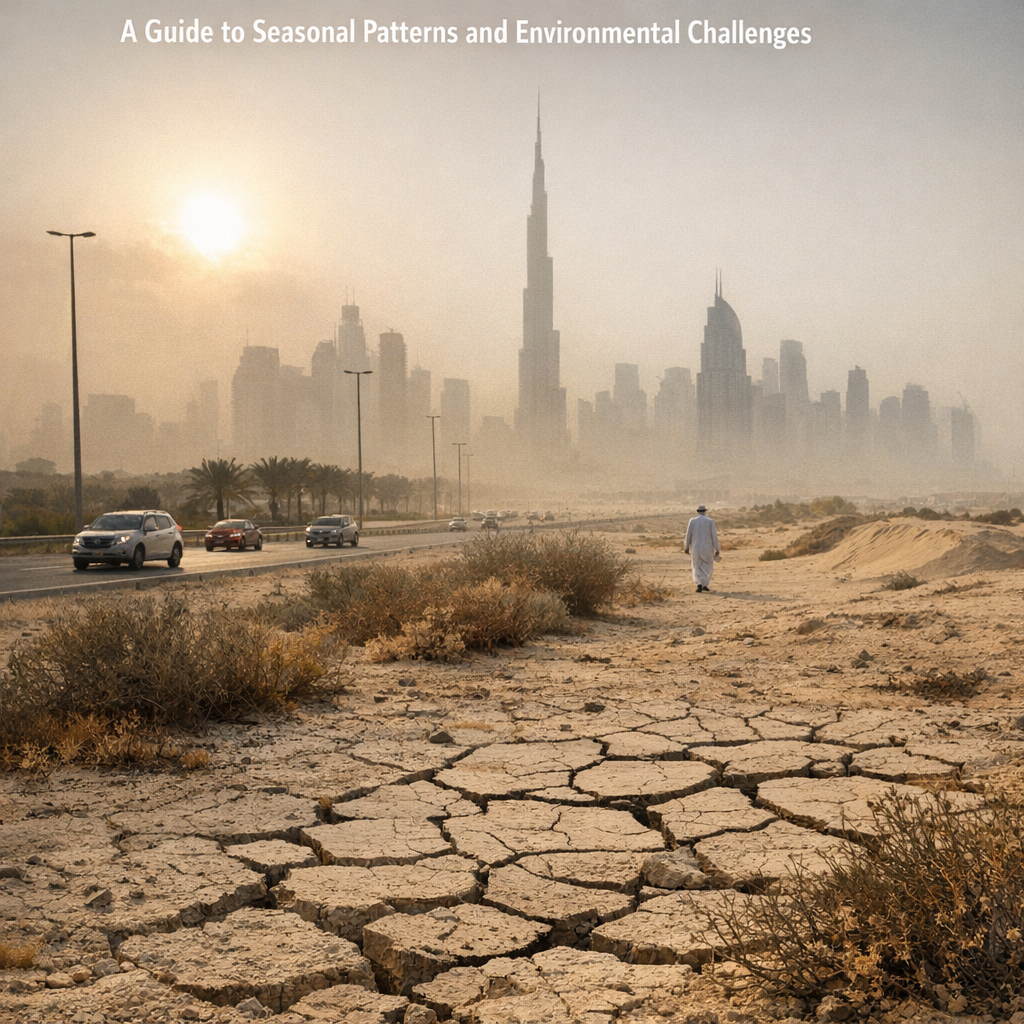
Dubai’s climate is characterized by its hot desert environment, with distinct seasonal variations that influence daily life and environmental conditions. Understanding these patterns is essential for residents and visitors alike.
Seasonal Overview
Summer (May to September)
During the summer months, Dubai experiences intense heat, with daytime temperatures often exceeding 40°C (104°F). Coastal areas combine high temperatures with elevated humidity from the Arabian Gulf, amplifying perceived heat stress. This combination can make outdoor activities challenging and necessitates precautions to avoid heat-related illnesses.
Winter (December to February)
Winters in Dubai are mild and pleasant, with daytime temperatures ranging between 20°C (68°F) and 26°C (79°F). This period is ideal for outdoor activities, as the weather is comfortable and rainfall is minimal. However, occasional short, heavy bursts of rain can occur, sometimes leading to brief disruptions.
Environmental Challenges
Sandstorms
Dubai is susceptible to sandstorms, particularly during the summer months. These storms, driven by strong northwesterly winds known as “shamal,” can reduce visibility and deposit fine dust across the city. Residents often notice layers of fine dust settling on balconies, cars, and windowsills during these events.
Urban Heat Island Effect
Rapid urbanization has led to the Urban Heat Island (UHI) effect, where built-up areas retain more heat than surrounding natural landscapes. This phenomenon results in higher temperatures in urban areas, especially at night, and can exacerbate the discomfort caused by the already high daytime temperatures.
Climate Change Impacts
Dubai faces significant vulnerabilities to the impacts of climate change, including extreme heat, water stress, and rising sea levels. These changes pose challenges to infrastructure, public health, and the environment. Mitigating the effects of climate change is imperative for safeguarding the UAE’s future sustainability and resilience.
Understanding Dubai’s climate and its associated environmental challenges is crucial for adapting to its conditions and ensuring the well-being of its residents and visitors.