

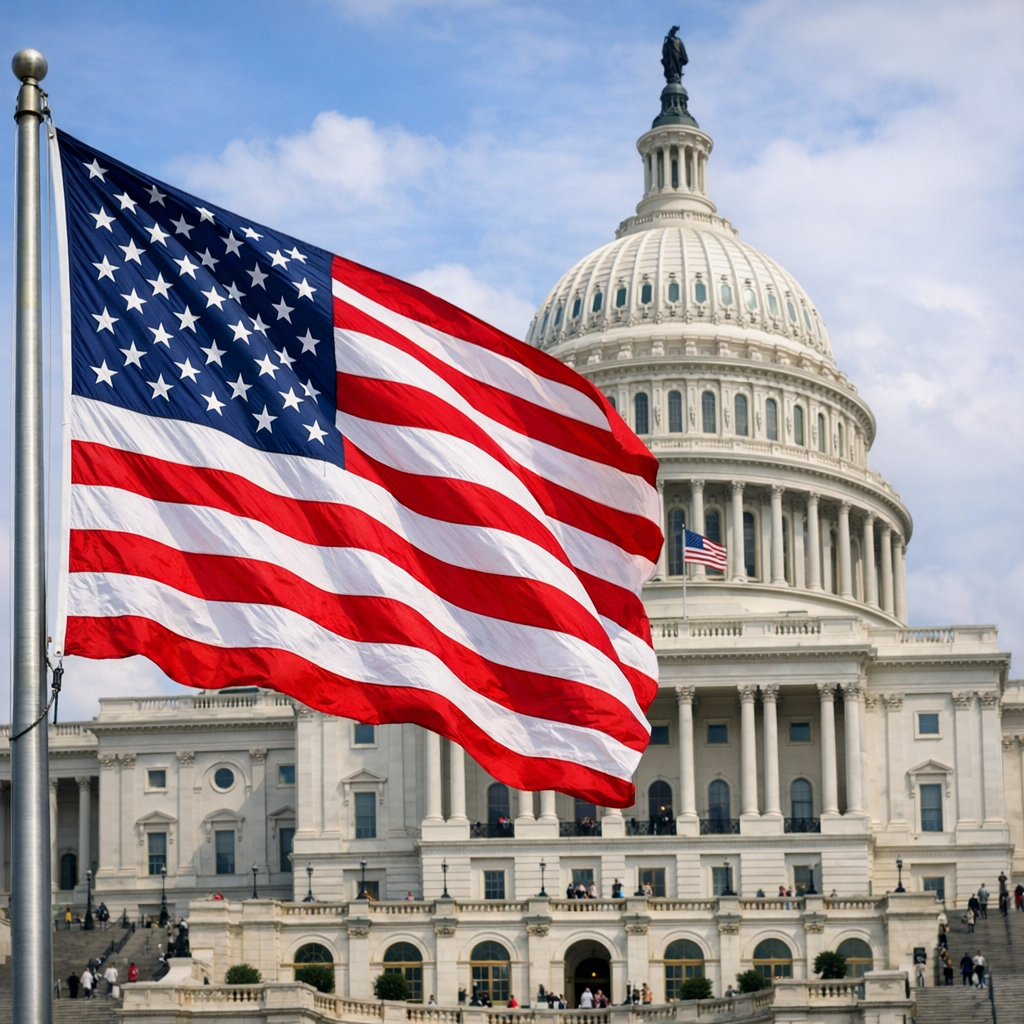
The United States continues to experience a dynamic interplay between economic growth and political developments, influencing both domestic and international landscapes.
Economic Performance and Outlook
In 2025, the U.S. economy demonstrated resilience, achieving a 2% growth rate despite significant policy shifts and a government shutdown in the fourth quarter. This growth was underpinned by strong productivity gains, even as employment growth slowed due to reduced immigration flows. Inflation remained stable, with tariff-induced increases in goods prices offset by declining services inflation. The fiscal deficit narrowed slightly to 5.9% of GDP, while general government debt rose to 123.9% of GDP. The current account deficit remained substantial at 3.7% of GDP. Looking ahead, GDP growth is projected to accelerate modestly to 2.4% in 2026, with core PCE inflation expected to return to 2% by the first half of 2027. Employment growth is anticipated to continue its slowdown, but the unemployment rate should remain near 4%.
Trade Policies and Tariffs
Trade policies have been a focal point, with tariffs playing a significant role in shaping the economic landscape. The International Monetary Fund (IMF) noted that higher tariffs are expected to modestly lower the trade deficit and raise revenue in the near term. However, they also represent a negative supply shock, potentially increasing the PCE price index by around 0.5% by early 2026 and reducing output by approximately 0.5%. The applied effective tariff rate on imports is projected to settle between 7% and 8.5% following recent changes to tariff authority.
Political Climate and Public Sentiment
Politically, the U.S. is navigating a complex environment. Public sentiment reflects this complexity, with a Pew Research Center survey indicating that about 28% of U.S. adults rate economic conditions as excellent or good, while 72% view them as only fair or poor. These perceptions have remained relatively unchanged over recent months but are notably lower than pre-pandemic levels. The upcoming midterm elections are poised to be influenced by these economic and political dynamics, with potential shifts in congressional control.
Implications for International Observers
For those observing from Dubai and the broader Middle East, these developments in the U.S. hold significant implications. The interplay between economic policies, trade relations, and political shifts in the U.S. can influence global markets, trade partnerships, and geopolitical strategies. Staying informed about these trends is crucial for businesses and policymakers aiming to navigate the evolving international landscape.