

By Fatima Abdullah
Major Corridor Works Underway
The Roads and Transport Authority (RTA) has awarded a AED 2 billion contract for the Latifa bint Hamdan Corridor. Stretching about 12 km, this new route will link key road arteries — including Sheikh Zayed Road, Al Khail Road, and Emirates Road — with bridges and tunnels cutting through traffic bottlenecks. When completed, travel time between Umm Al Sheif and Emirates Road should fall by more than half, from about 33 minutes to 15. The corridor is designed for around 16,000 vehicles per hour in both directions and will serve several areas including Nad Al Sheba, Dubai Hills, Majan, and Global Village. Completion is expected by end-2028.
This project reflects growing emphasis on east-west connectivity to meet rising population and development pressures across the city. It’s one among many infrastructure works aligning with Dubai’s long-term goals.
Transforming Al Shindagha Corridors & Tunnel Enhancements
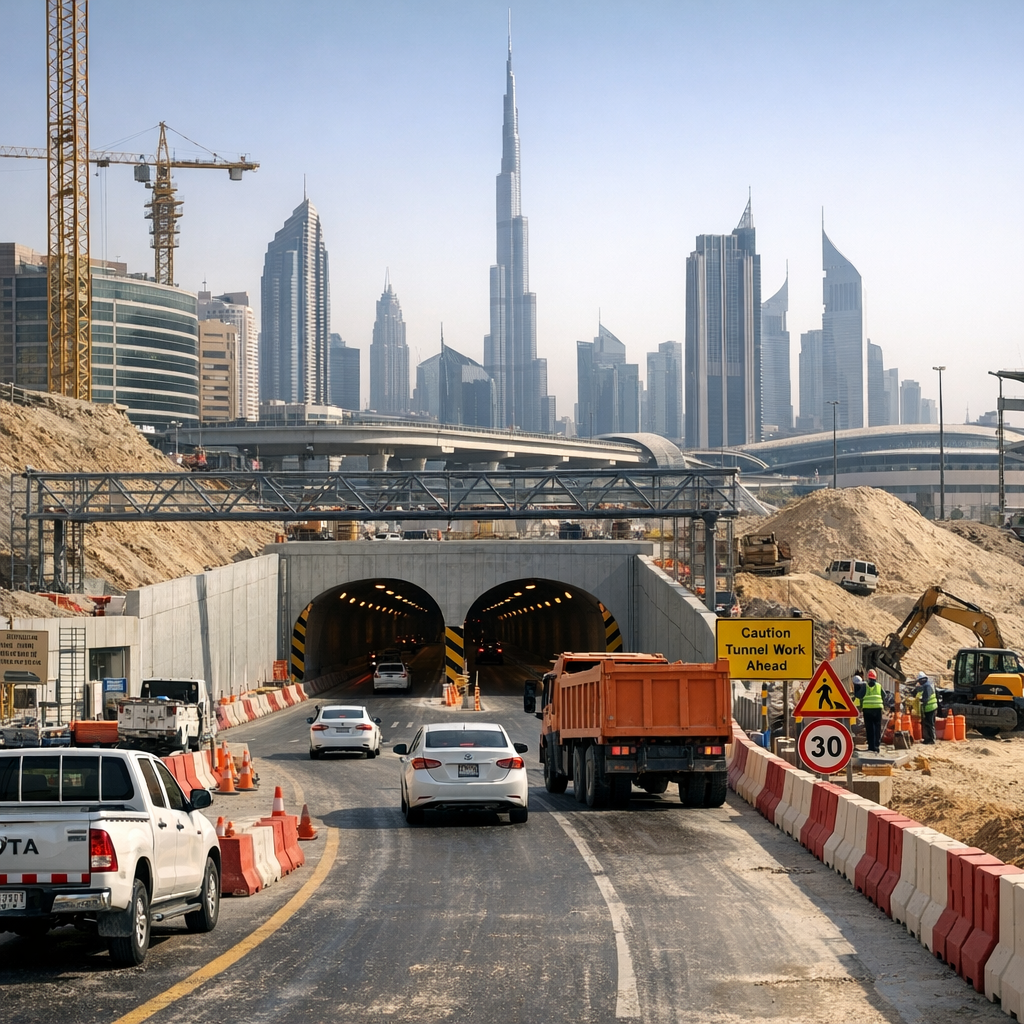
The Al Shindagha Corridor Improvement is another high-priority scheme. Recently, the RTA announced that the Al Khaleej Street Tunnel — part of this corridor — is now 80 % complete. This 1,650-metre tunnel runs between the Infinity Bridge ramp in Deira and the intersection with Al Wuheida Street and includes three lanes in each direction, capable of handling up to 12,000 vehicles per hour. The work aims to ease flow around Deira, Waterfront Market, Al Mamzar, and nearby districts.
Steps Toward Better “Last Mile” Travel
Big roadway systems are essential, but so is how people move at neighborhood level. Dubai’s transport planners are now focusing on improving access to public transit through more pedestrian paths, cycling and scooter routes, and better feeder links. By 2030, plans are in place to connect 25 residential areas with 63 public transit stations, improving safety, speed, and convenience for thousands. Bike-and-e-scooter usage has already risen noticeably, with tens of millions of trips recorded annually. These upgrades are part of a broader strategy to ease congestion and shift people away from relying solely on cars.
Community Reporting & Night-time Concerns
Residents in some areas, such as Jumeirah Lakes Towers (JLT), have shared frustration over construction noise during the night, claiming it disrupts sleep and daily life. While Dubai Municipality rules require special permits and decibel limits for any night-time construction, enforcement appears uneven. Some residents say they used noise-reporting tools but have not received feedback.
On the other hand, the “Madinati” service — available through DubaiNow and via WhatsApp — has been enhanced to let people report issues like broken pavements, traffic-signal outages, bus-shelter damage, or signage problems. RTA, Digital Dubai, DEWA, and Dubai Municipality now collaborate to handle these local observations faster. Since launch, Madinati has logged over 300,000 reports, underlining strong resident engagement.
What It Means for Side-Streets & Daily Travel
- Expect roadworks and temporary detours near Latifa bint Hamdan and Al Khaleej Street for the next few years.
- Noise, pollution risks may spike during construction phases — keep an eye on official notices.
- If you rely on public transport, walking, or cycling, the new “last-mile” upgrades should gradually make many journeys easier.
- Use tools like Madinati to raise issues — visibility has improved, and authorities are more responsive.
These infrastructure changes are serious undertakings. They will reshape how we live, move, and relate to our neighborhoods. While they promise smoother travel and better facilities, change means adjustment. Residents across Dubai should stay informed and use communication channels to ensure the city grows with everyone’s needs in mind.