

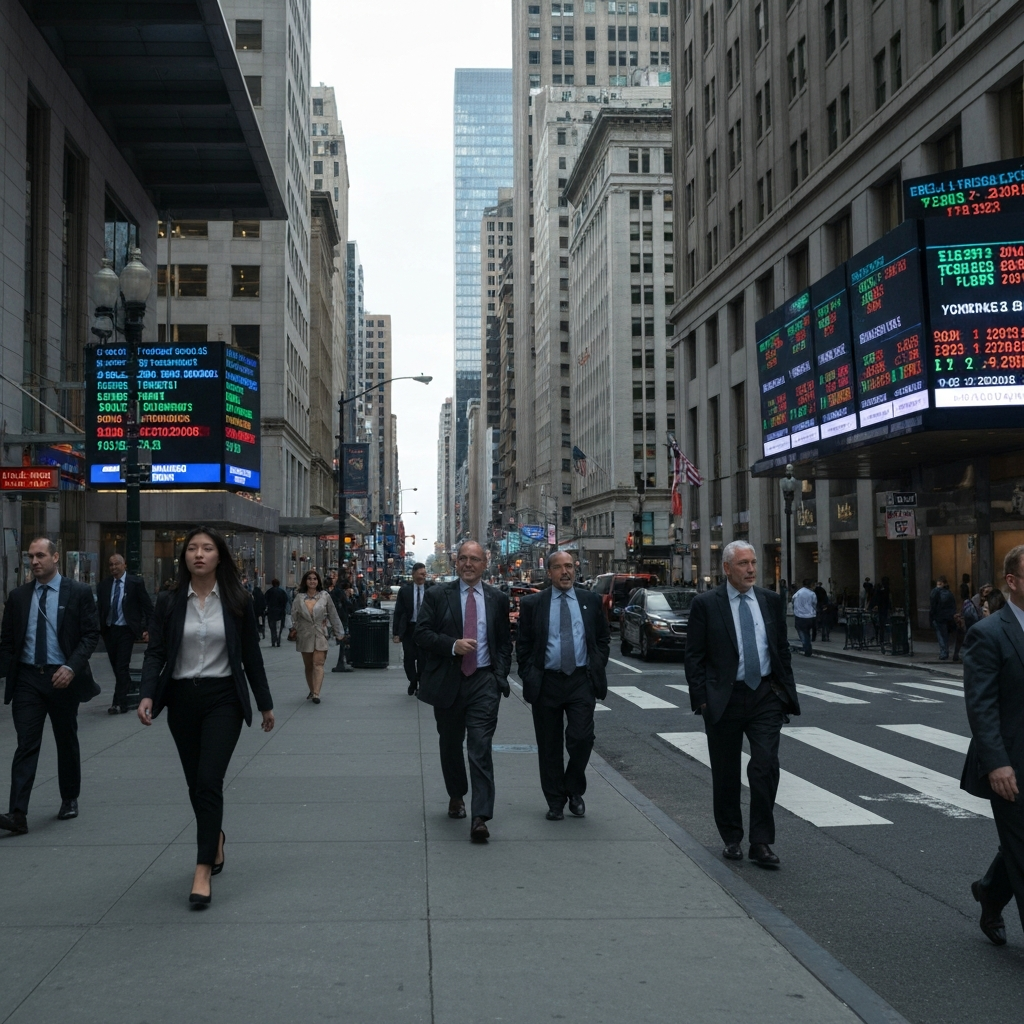
The United States economy has been experiencing a period of mixed signals, with various indicators reflecting both growth and challenges. As of early 2026, the International Monetary Fund (IMF) projected a ‘buoyant’ U.S. economy, anticipating a 2.4% growth in gross domestic product (GDP) for the fourth quarter of 2026, up from 2.2% the previous year. Unemployment was expected to decline from 4.5% in late 2025 to 4.1% in 2026, with inflation projected to reach the Federal Reserve’s 2% target by 2027. However, the IMF also cautioned about rising federal budget debts posing a growing stability risk. [Source: Business Standard]
Despite these optimistic projections, certain sectors have shown signs of strain. Small businesses, in particular, have faced mounting pressures, with rising bankruptcies and weak job growth signaling challenges ahead. [Source: Business Standard]
Inflation remains a concern, with wholesale prices surging by 4% in recent months, complicating the Federal Reserve’s efforts to manage economic stability. [Source: PBS News]
In the political arena, Americans have expressed significant anxiety about their political system. A Gallup poll revealed that about one-third of Americans identified politics and government as the nation’s most pressing problem, a sentiment higher than in most other wealthy democracies. This concern is particularly pronounced among older Americans, while younger citizens are more focused on economic challenges like housing affordability. [Source: Associated Press]
In summary, while the U.S. economy shows signs of growth and resilience, underlying challenges such as rising debt, inflation, and political anxiety continue to influence its trajectory. Monitoring these factors will be crucial for understanding the future direction of the U.S. economy.